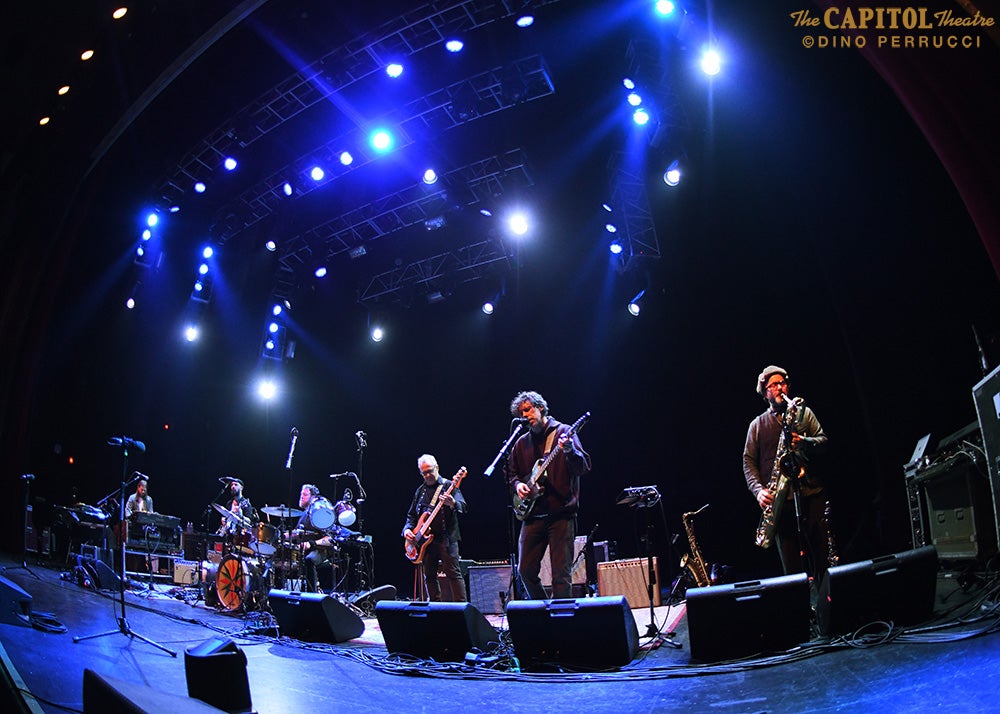
Make It Worth Saying: JRAD, Bob Weir, and Kindness
January 16–17–18, 2026
Written by Kelley Lauginiger
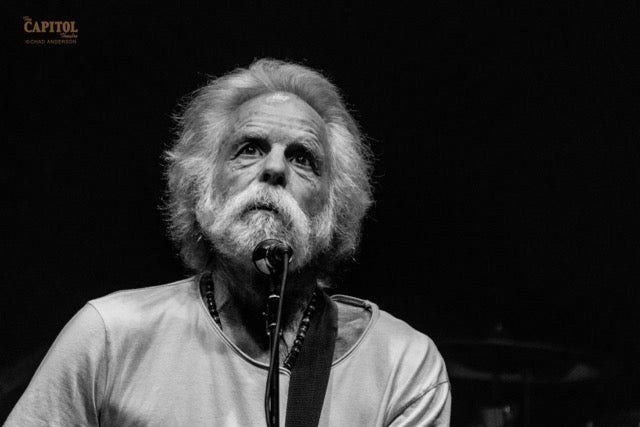
“The blank page is the greatest challenge life has to offer as far as I can see. What is worth saying anymore? Especially in an era where it’s wall-to-wall, universal output, and everybody is saying something?”- Bob Weir (October 16, 1947 – January 10, 2026)
(Chad Anderson)
In this 2022 interview, Bob Weir reflected on continuing Jerry’s unfinished business, shaped by a lifetime of music on the road. This question about what is worth saying lingers not just because it’s abstract, but because it’s communal. What’s worth saying now depends on how we show up together as listeners, as fans, and as part of the room.
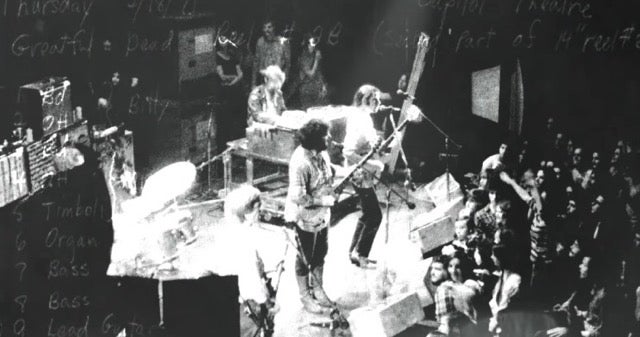
At a show, we’re not just consuming sound. We’re co-creating something fragile and alive. Energy never dies, and The Cap has plugged in amps and hosted thousands of rock and roll crowds for some of the most legendary, badass American rock music energy ever created. The Grateful Dead debuted “Bertha,” “Deal,” “Wharf Rat,” and more at The Cap in 1971, as detailed here.
(Stephen Gilbert)
The Cap stage and room are a sacred space. When the room listens, when presence outweighs chatter, and when we can hear “Sage and Spirit,” we will have found peace. That is our kindness. Shared attention. The music opens something deeper in the conversation between the band and the audience that Jerry and Bobby both talked about so often. Intentional presence and shared attention are their own kind of kindness. Active listening as participation in the musical conversation. We are so lucky to be part of it.
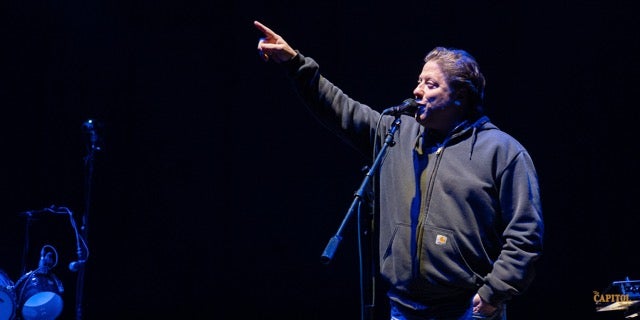
To properly anoint the space on Friday, class act and former lot kid turned successful theater owner and festival patriarch Pete Shapiro came out on the mic before the show. He welcomed the crowd to his Capitol Theatre, protecting Weir’s memory with a well-respected 10-second moment of silence before the music started. Shapiro shared that Bob Weir played 42 times at the Capitol Theatre, while the crew projected the last note Weir wrote to The Cap up onto the wall. Shapiro referenced The Hitchhiker’s Guide to the Galaxy, stating, “Google it. That’s the meaning of life. 42.”
(Marc Millman)
As an iconic symbol in the Grateful Dead lexicon, red roses were scattered across the country, from Weir’s Saturday San Francisco Warfield ceremony to Port Chester’s Capitol Theatre.
In memoriam, The Cap crew passed out fresh long-stemmed red roses to showgoers on Friday to celebrate Bobby around the venue all weekend. Always thinking of the little things that set their shows apart and make the nights one-of-a-kind, ushers handed out show pins to early guests each night as well. “Cozy,” just like Bobby said, and that’s why it’s special.
The Joe Russo’s Almost Dead (JRAD) run was already scheduled for this weekend before Bobby passed, surrounded by family, on January 10, but the timing was kismet. While there is no quick or easy answer to the void left by Weir, coming together with JRAD and Deadheads to celebrate the music of Bob Weir and the Grateful Dead at the Capitol Theatre felt like a blessing from Bobby himself. A wink from Gonesville, reminding us that we can move forward together with music and connection, even if we miss him.
Keys and pianist Marco Benevento’s visible joy playing alongside lifelong friends twinkled in his eyes and across the ivories, with spacey vibes throughout the weekend. His prankster segues across the entire Dead catalog and beyond urged the band’s playful chemistry, while guitarist Scott Metzger channeled Bobby’s essence with respect and integrity.
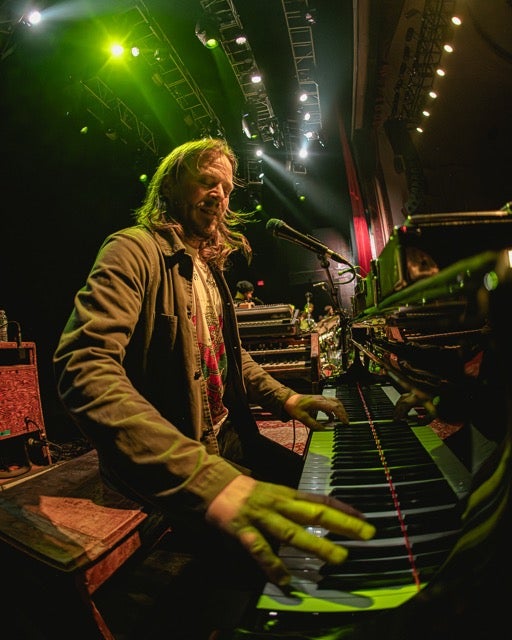
(Andrew Blackstein)
It was in these moments of reverence when the music asked us to lean in with our hearts and our ears, rather than speak over it. Drummer Joe Russo spoke to the crowd each of the three nights, a rare occurrence beyond introducing the band, sharing how Bobby would want us to live kindness out in our day-to-day lives.
In sharing Weir’s vision, Russo painted a picture of a world founded in kindness, community, and friendly generosity, choking up as he spoke about his relationship with Bobby and this music. The words “be kind” hung in the air, just as they did at GD50, that time from Mickey.
Reflecting on this as a fan and audience member, the raw emotion in these moments made an impact in more ways than one. If we’re lucky, we can envelop the unique energy created at a show and, with gratitude, carry it with us to share out into the world. A wizard’s potion to protect you and others in your quest to be kind. If we think of it this way, maybe that’s exactly the same answer to “what to fill the page with” that Bobby asked.
Weir’s 20-plus-year tour manager Matt Busch shared this same sentiment at the Capitol Theatre’s sister venue, Brooklyn Bowl, last week. He noted that it’s up to you, and all of us, to continue this beautiful legacy and music of the Grateful Dead. “The future’s here and we are it,” Busch said.
For this special JRAD run at The Cap, fans from around the world and a few special guests came to join the celebration. Allman Brothers guitarist and Gov’t Mule founding member Warren Haynes sat in for set two on Friday, with saxophonist, flautist, hat influencer, and friend of the band Stuart Bogie playing the full show Saturday.
The setlists are linked here, but here are a few highlights that really tied the room together.
On Friday, JRAD and Haynes covered “Bird Song” in the same room where it was debuted by the Grateful Dead on February 19, 1971. Haynes led vocals, changing “she” to “he” for Weir, as the song was originally written for Janis Joplin. Allman Brothers covers included “In Memory of Elizabeth Reed,” “No One to Run With,” and “Mountain Jam,” which was HOT HOT HOT, like it formed a new layer of the Earth’s molten core that you can now dance upon.
On Saturday, Bogie’s woodwind delicacies added dainty beauty and bold blasts to musical moments not otherwise achievable without his instruments. Tying in Friday’s Allman-fest, guitarist Tom Hamilton teased “Jessica” leading into Saturday’s “Fire on the Mountain,” which was so charming the whole place smiled like the Cheshire Cat. I think Dickey Betts even grinned from wherever he may be. May he rest in rock and roll. Bassist Dave Dreiwitz highlighted the end of set two with some serious bombs during “Dancin’ in the Street,” with a Benevento-Duo jam sandwiched inside. What a band.
A unique acoustic rendition of “Sage and Spirit,” sounding as clean as the Dead studio version, caressed us into the headspace before bringing out some serious heaters that blew the roof off.
As part of a political commentary in a fist-pounding, foot-stomping section of set two, Warren Zevon’s “Lawyers, Guns, and Money” proved the sax to be a significant driver of raging crowd participation in this non-Dead cover. This flowed smoothly into “Throwing Stones,” with “Liberty” teases, and felt like the America we are proud of, followed thematically by “Brokedown Palace.” This song held dualities, both the lyric “Fare Thee Well” for Bobby, and a broader reflection on the passage of time, reminding us that everything is temporary.
One thing about JRAD is that they use their platform to share so many little nods for those who listen. After “Help on the Way” kicked off the section, “Brokedown” felt like the closing of an epic saga. Many lessons can be found within, but the main takeaway is this: there is hope in the music, and we have each other. The future is here, and we’re on our own, together. Not just the bands playing Dead music, but all of us. All they ever wanted to know is, “Are you kind?” They told us, and it’s still true.
Notably, to end the show, Bogie wailed the solo for Bruce Springsteen’s “Thunder Road,” which felt appropriate given that all the band members (except Bogie) are from New Jersey.
Sunday’s show was JRAD only, and it delivered all the feels. “Lost Sailor” and “Saint of Circumstance” kicked off the final night of the run, weaving through thoughtful lyrics and Bob-heavy jam drivers. Dreiwitz blew the walls off during “Estimated Prophet,” as teary-eyed faces appeared around The Cap when the lights came up during the lyric “California!” Snippets of Tom Petty’s “Runnin’ Down a Dream” popped up in a ripping “Jack Straw.”
A huge showing from Russo in “The Other One” sounded like four drummers, but it’s just one, HOW DOES HE DO IT? Hamilton, though he plays “the Jerry parts,” was spotted throwing in a few Bobby knee kicks. That just felt right.
JRAD carries the music forward not by imitation, but by care, and clearly, with great responsibility. They remind us that the future of Grateful Dead music and community isn’t guaranteed by talent or dancing bear hoodies alone. The spirit of the Dead lives on in how we treat one another and ourselves. That means in the room, offering quiet respect when it matters, and beyond the show, carrying that kindness out into the world like a ripple after the lights come up.
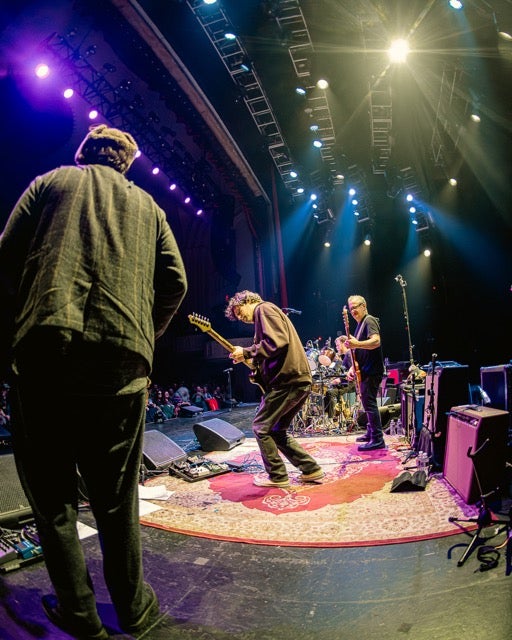
(Andrew Blackstein)
If the blank page is still the greatest challenge, maybe the answer isn’t saying more. Maybe it’s listening better, choosing what’s worth saying together selectively and with kindness, and protecting the spaces where that conversation can still happen safely.
Thank you, Capitol Theatre and JRAD, for being some of the most innovative catalysts of conversation and dance in American rock and roll. We love you. RIP Bob Weir, Forever Grateful.